Home › Common Problems › Foundation Wall Water Intrusion
Foundation Wall Water Intrusion
in Kansas City, MO
Foundation wall water intrusion is when water forces its way through basement or crawl space walls. Kansas City sits in the central United States and gets some of the most intense spring and early summer storms in the country. Those storms can drop several inches of rain in just a few hours. Kansas City's heavy clay soils hold that water against foundation walls for days after the rain stops. Without waterproofing, that steady pressure finds every small defect and will eventually weaken the wall itself.
Kansas City Foundation Repair Pros helps Kansas City, MO homeowners fix foundation wall water intrusion — call for a free inspection.
Quick Answer
Kansas City thunderstorms can drop several inches of rain fast and the clay soil holds that water against your basement walls for days. Water then forces its way through any small crack or weak spot. Interior drain systems and wall sealants stop water before it floods your basement. Call for an inspection if you see wet spots or white chalky stains on your walls.
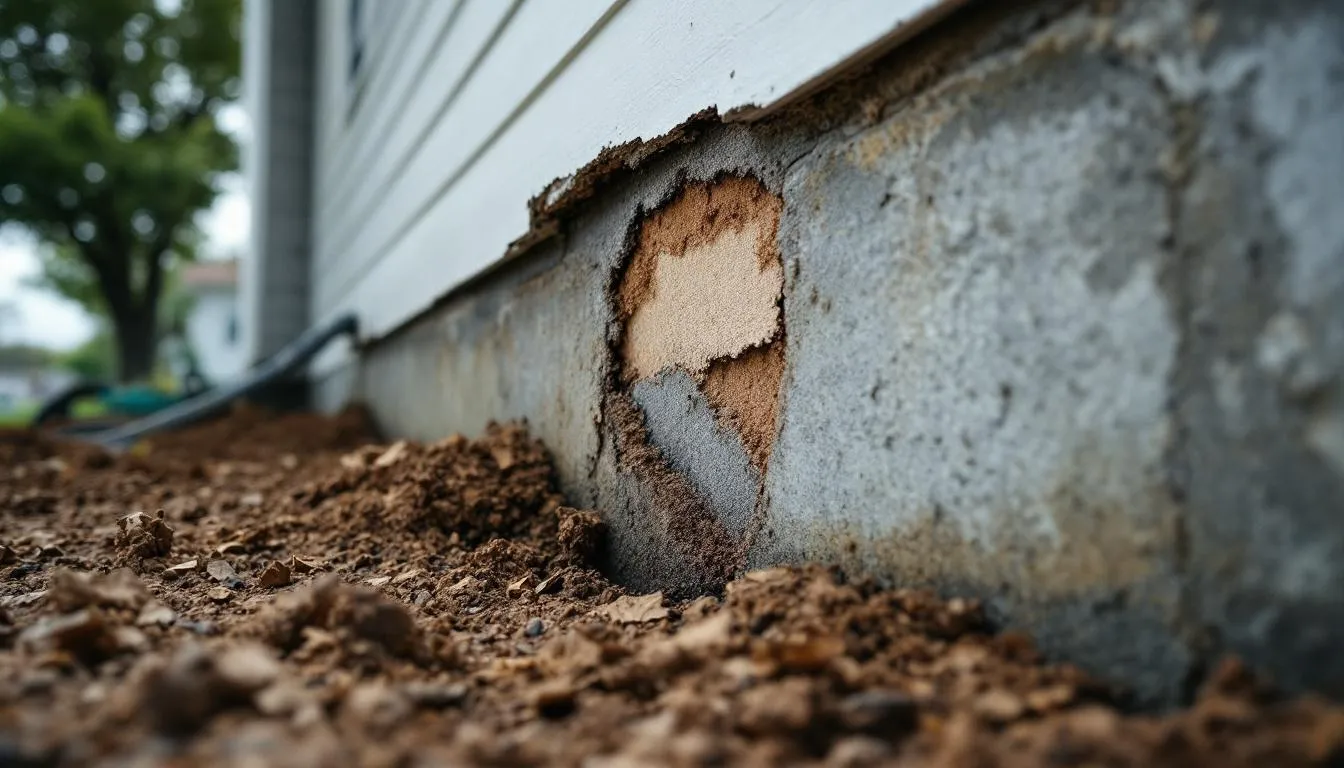
Telltale Signs
Warning Signs to Watch For
- Water running down or seeping through the interior face of a basement wall during or after rain
- Damp or wet spots on the wall that correspond to cracks or mortar joints
- Efflorescence white mineral crust on the wall surface indicating repeated wet-dry cycles
- Peeling paint, bubbling drywall, or rust stains on the lower portion of the basement wall
- Musty mold smell in the basement that persists even when no water is visibly present
- Water pooling along the joint where the basement floor meets the wall after heavy rain
Root Causes
What Causes Foundation Wall Water Intrusion?
Hydrostatic Pressure Through Wall Cracks
After a heavy storm, Kansas City's clay soils get fully saturated and the water table rises around the foundation. That water pushes against the basement wall with pressure equal to the weight of the water above any weak spot. Even a hairline crack from normal concrete shrinkage becomes a pressurized channel. Enough pressure and you get a visible stream running down the inside of the wall.
The Fix
Interior Crack Injection with Drain Tile
Epoxy or polyurethane foam is injected under pressure into each crack to seal it all the way through the wall. A drain tile system is then installed along the inside perimeter at the footing level. Drain tile is a perforated pipe that catches any water that still seeps in and routes it to a sump pump.
Failed Exterior Waterproofing Membrane
Kansas City homes built before the 1980s usually got only a tar or asphalt dampproofing coat on the outside of the foundation wall. Dampproofing slows moisture but was never meant to stop water under pressure. That coating cracks and falls apart over 30 to 50 years. Once it fails, water soaks straight through the porous concrete or block until it reaches the inside of the wall.
The Fix
Exterior Excavation and Waterproof Membrane Installation
We dig down to the footing, strip off the failed coating, and apply a rubberized waterproofing membrane to the outside of the wall. A drainage board goes over the membrane to move water down and away before it can build pressure against the wall.
Wall-Floor Joint Seam Failure
The seam where a poured concrete wall meets the floor slab is called a cold joint. A cold joint forms because the wall and the floor were poured at different times and never fully bonded together. Kansas City soils shift with the seasons, and that movement breaks any caulk placed in the joint. The open seam then becomes the easiest path for water under pressure to enter the basement.
The Fix
Interior Perimeter Drain System with Sump Installation
A channel is cut along the inside edge of the basement floor where the wall meets the slab. A perforated drain pipe goes in at footing depth and gets packed with washed stone. Water coming through that joint gets caught right away and flows to a sump pit, where a pump sends it away from the house.
Self-Diagnosis
Which Cause Applies to You?
Check the signs you're observing to narrow down the likely root cause before your inspection.
| What You're Seeing | Hydrostatic Pressure Through Wall Cracks | Failed Exterior Waterproofing Membrane | Wall-Floor Joint Seam Failure |
|---|---|---|---|
| Water visibly flowing through a specific crack in the wall during a storm event | |||
| Widespread damp patches across the entire wall face with no single crack source | |||
| Water appears along the floor line at the base of the wall rather than through the wall | |||
| Efflorescence heaviest along the horizontal mortar joints of a concrete block wall | |||
| Seepage occurs only during the highest-intensity storms, not moderate rainfall | |||
| Basement stays dry in summer but seeps every spring when the water table is highest |
Free Quote
Get a free quote in Kansas City
No obligation — tell us what's going on and we'll text you back shortly.
Other Problems
Services That Fix This
Foundation Wall Water Intrusion Near You
Also Helpful