Home › Common Problems › Stem Wall Cracks
Stem Wall Cracks
in Kansas City, MO
Stem walls are short concrete walls that sit on a footer and hold up the floor above. You find them in crawl space homes and raised ranch houses across Kansas City's established neighborhoods. Kansas City's clay soils push hard against these walls, and Missouri's temperature range of roughly 100 degrees between summer highs and winter lows cracks them over time. A crack that starts small will let in water and can eventually drop the floor it was built to hold.
Kansas City Foundation Repair Pros helps Kansas City, MO homeowners fix stem wall cracks — call for a free inspection.
Quick Answer
Stem walls in Kansas City crawl space homes crack because clay soil pushes against them and Missouri's extreme temperature swings stress the concrete. A small crack lets water in and gets bigger each winter. Crews patch cracks and add wall supports to stop more movement. Call for an inspection if you can see daylight or water coming through a wall crack.
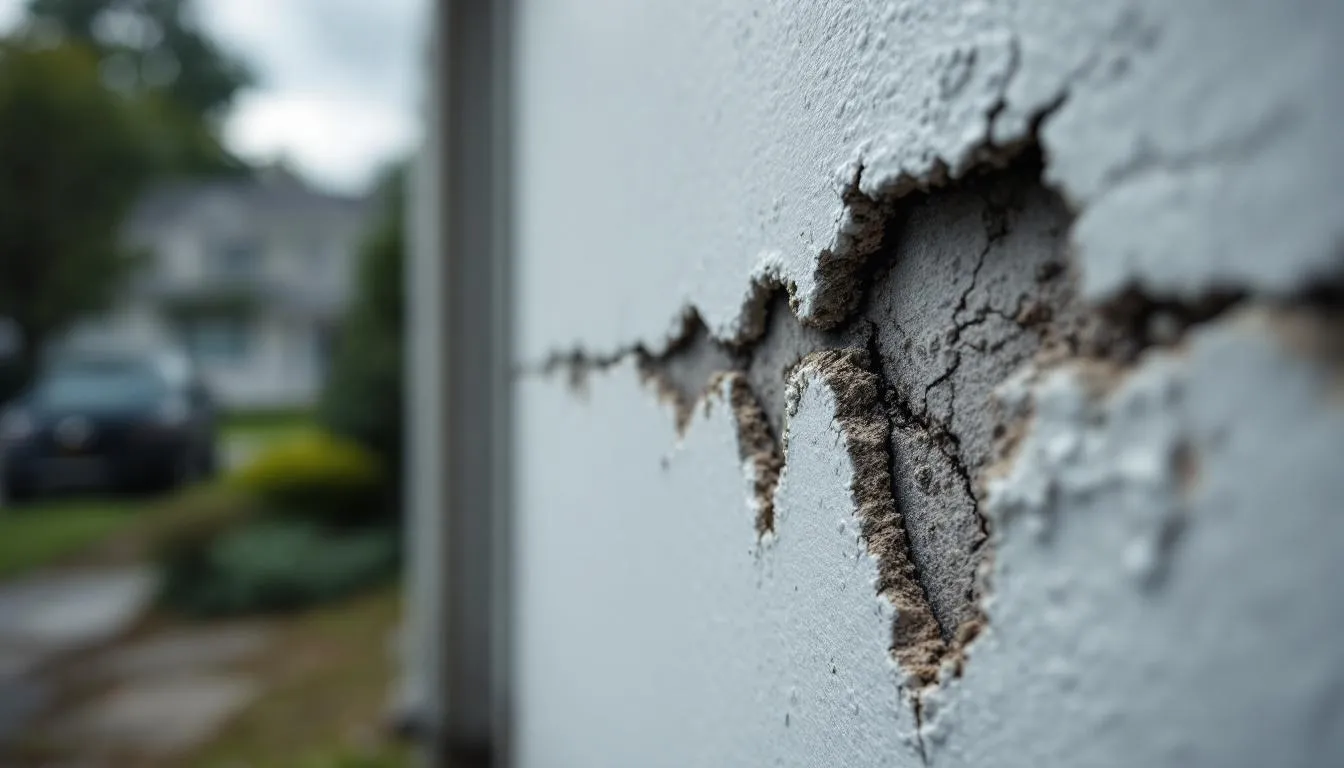
Telltale Signs
Warning Signs to Watch For
- Horizontal or diagonal cracks visible on exposed crawl space or basement stem wall surfaces
- Water or mud streaking down the interior face of a stem wall after rain
- Sections of the stem wall bowing or rotating inward toward the crawl space
- Efflorescence white mineral deposits tracing the path of a crack on the wall face
- Gaps appearing between the stem wall top and the wooden sill plate sitting on it
Root Causes
What Causes Stem Wall Cracks?
Lateral Clay Soil Pressure
Kansas City's clay soils soak up spring rain and swell against stem walls. A stem wall is the short concrete wall between your footing and the wood frame above. Most stem walls in pre-1980s construction are only 6 to 12 inches thick and have no steel inside. That is not enough to resist the sideways push, so horizontal cracks form near the middle of the wall.
The Fix
Carbon Fiber Strap Wall Reinforcement
Carbon fiber straps are glued vertically to the inside of the stem wall from the footing up to the sill plate. The sill plate is the wood piece that sits on top of the wall and carries the floor frame. Carbon fiber does not rust and stops the wall from moving inward without any digging outside.
Freeze-Thaw Concrete Deterioration
Missouri winters push concrete through many freeze-thaw cycles as temperatures cross the freezing point over and over. Water inside a crack expands 9 percent when it freezes, which forces the crack wider each time. Stem walls poured with a high water-to-cement ratio, which was common in mid-century Kansas City construction, are especially porous and break down faster.
The Fix
Crack Injection with Penetrating Concrete Sealer
Epoxy or polyurethane is injected under pressure to fill the crack all the way through the wall. Then a silane-siloxane sealer goes on the outside face to cut down how much water the concrete soaks up. That breaks the freeze-thaw cycle before it can start again.
Differential Footing Settlement
Kansas City's clay soils dry out unevenly, so one section of footing can settle while the next stays put. When that happens, the stem wall above has to span the gap on its own. The strain shows up as diagonal cracks running at roughly 45 degrees from a corner or opening.
The Fix
Footing Underpinning with Helical Piers
Helical piers are driven through the settled footing down to stable soil below the active clay zone. A helical pier is a steel shaft with screw-like blades that anchor in firm ground. Once the movement stops, the cracks in the stem wall are filled with structural injection to restore the wall.
Self-Diagnosis
Which Cause Applies to You?
Check the signs you're observing to narrow down the likely root cause before your inspection.
| What You're Seeing | Lateral Clay Soil Pressure | Freeze-Thaw Concrete Deterioration | Differential Footing Settlement |
|---|---|---|---|
| Horizontal crack running across the middle height of the stem wall for several feet | |||
| Diagonal crack originating at a wall corner and running at roughly 45 degrees | |||
| Surface of the stem wall is flaking or scaling off in thin layers with no clear crack | |||
| Wall section is visibly bowing inward when viewed from inside the crawl space | |||
| Multiple fine cracks appearing across the wall face after a hard winter |
Free Quote
Get a free quote in Kansas City
No obligation — tell us what's going on and we'll text you back shortly.
Other Problems
Services That Fix This
Stem Wall Cracks Near You
Also Helpful